Most Consumed Drinks by Country: What Each Nation Drinks Most
Most Consumed Drinks by Country: What Each Nation Drinks Most
What's in your glass right now? Whether it's a morning coffee, afternoon tea, or evening beer, your beverage choice says something about your culture. But have you ever wondered what people in other countries drink most? From the milk-loving nations of Asia to the beer capitals of Europe, drinking habits around the world reveal fascinating patterns about culture, climate, and tradition.
This comprehensive guide explores the most consumed drinks across 195+ countries, revealing surprising trends and regional preferences that shape global beverage consumption in 2025.
Global Beverage Consumption: The Big Picture
When we look at drinking habits worldwide, six major beverage categories dominate:
- Milk leads globally with 95+ countries
- Beer is the top choice in 70+ countries
- Soda (Soft Drinks) is popular in 11 countries
- Wine reigns in 13 countries
- Tea dominates in 9 countries
- Rum is preferred in 8 Caribbean nations
- Coffee is the favorite in 5 countries
- Spirits lead in 2 countries
Countries by Most Consumed Beverage
Find your country below to discover what beverage dominates national consumption. Countries are organized alphabetically within each beverage category.
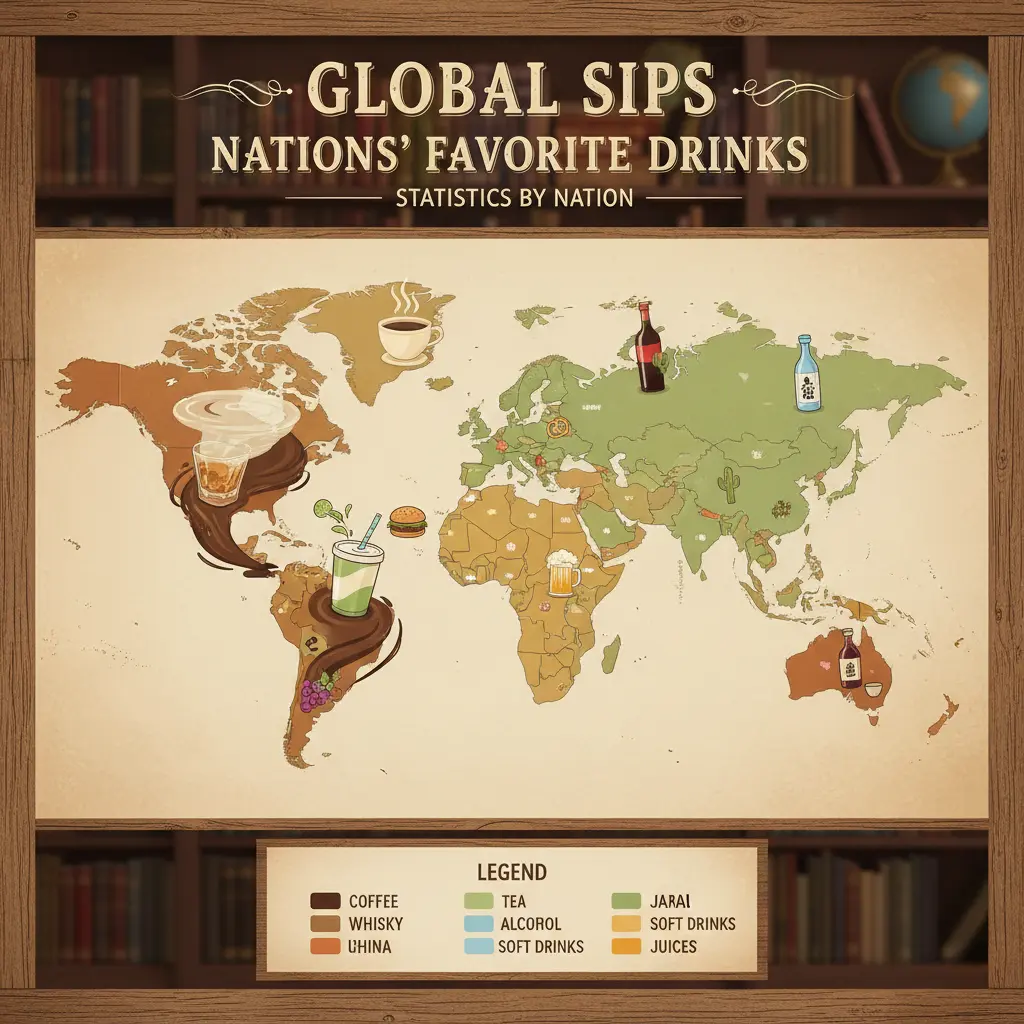
BEER (70 Countries)
Beer culture spans continents, from European brewing traditions to African sorghum beers and Asia's tropical lagers. Beer's popularity stems from its social nature, relatively low alcohol content, and widespread local production.
Angola, Australia, Austria, Benin, Bhutan, Bosnia and Herzegovina, Botswana, Brazil, Brunei, Bulgaria, Burkina Faso, Burundi, Cambodia, Cameroon, Canada, Chad, Colombia, Congo, Czech Republic, Dominican Republic, Equatorial Guinea, Eritrea, Fiji, Gabon, Germany, Ghana, Gibraltar, Greece (note: Wine primary), Greenland, Grenada, Haiti, Ivory Coast, Jamaica, Kiribati, Liberia, Mauritius, Micronesia, Mozambique, Myanmar, Namibia, New Zealand, Nigeria, Panama, Paraguay, Peru, Poland, Romania, Russia, Rwanda, Samoa, Sao Tome and Principe, Seychelles, Singapore, Slovakia (note: Milk primary), Solomon Islands, South Africa, South Korea, Spain, Tanzania, Thailand, Togo, Trinidad and Tobago, Uganda, United Kingdom, Vietnam, Zambia, Zimbabwe (note: Milk primary)
Why Beer? In Germany and Czech Republic, beer is deeply woven into national identity. African countries have vibrant beer cultures mixing traditional brewing with commercial brands. Asia's tropical nations favor beer as a refreshing option in hot climates. Social gatherings worldwide revolve around beer, making it a universal bonding beverage.
MILK (95 Countries)
Milk is the world's most universal beverage, providing essential nutrients across diverse cultures. This dominance reflects agricultural traditions, religious practices, and nutritional needs spanning millennia.
Afghanistan, Albania, Armenia, Bangladesh, Cape Verde, China, Comoros, Costa Rica, Croatia, Cyprus, Denmark, Djibouti, DR Congo, Ecuador, El Salvador, Estonia, Eswatini, Ethiopia, Falkland Islands, French Polynesia, Gambia, Guatemala, Guinea, Guinea-Bissau, Guyana, Honduras, Hong Kong, Iceland, India, Iraq, Israel, Japan, Jordan, Kazakhstan, Kenya, Kuwait, Kyrgyzstan, Latvia, Lebanon, Lesotho, Libya, Lithuania, Macau, Madagascar, Malawi, Malaysia, Maldives, Mali, Malta, Marshall Islands, Mauritania, Mexico (note: Soda primary), Mongolia, Montenegro, Nauru, Nepal, Netherlands, New Caledonia, Nicaragua, Niger, North Macedonia, Oman, Papua New Guinea, Philippines, Qatar, Saudi Arabia (note: Soda primary), Senegal, Serbia, Sierra Leone, Somalia, South Sudan, Sudan, Suriname, Sweden, Switzerland (note: Wine primary), Syria, Taiwan, Tajikistan, Tonga, Tunisia, Turkmenistan, Tuvalu, Ukraine, United Arab Emirates, Uzbekistan, Venezuela, Yemen
Why Milk? In many Asian and African nations, milk consumption is tied to agricultural traditions and religious practices (especially in Hindu and Islamic cultures). Countries with large dairy farming industries naturally consume more milk. In colder European nations like Sweden and Iceland, milk has been a preservation-friendly protein source for centuries. Japan's preference shows how traditional diets evolved with modernization.
SODA / SOFT DRINKS (11 Countries)
Soda represents relatively recent shifts in drinking habits driven by industrialization, marketing, and American cultural influence. This concentration in the Americas reflects the birthplace of major soft drink brands.
Argentina, Belgium, Bolivia, Chile, Guam, Hungary, Indonesia, Northern Mariana Islands, Puerto Rico, United States, Uruguay
Why Soda? The United States pioneered the soft drink industry, creating globally recognized brands like Coca-Cola and Pepsi. American cultural influence spread soda consumption throughout Latin America. Interestingly, Belgium's preference may reflect its role as a European distribution hub, while Indonesia's tropical climate makes cold soft drinks appealing. Mexico and other nations show rising soda consumption linked to urbanization.
WINE (13 Countries)
Wine countries are concentrated in traditional wine-producing regions where viticulture has shaped local economies and cultures for centuries. These nations share Mediterranean climates ideal for grape cultivation.
Andorra, France, Georgia, Italy, Liechtenstein, Luxembourg, Moldova, Monaco, Portugal, San Marino, Slovenia
Why Wine? France, Italy, and Georgia (considered the birthplace of wine, dating back 8,000 years) have turned winemaking into an art form. These nations have Mediterranean climates perfect for grapes, centuries-old winemaking traditions, and cultures where wine accompanies daily meals. Even tiny nations like San Marino and Monaco maintain strong wine traditions as part of their cultural identity.
TEA (9 Countries)
Tea represents tradition, hospitality, and daily ritual in these nations. Though only 9 countries identify it as their primary drink, tea's cultural impact far exceeds this number, with billions consuming it daily worldwide.
Azerbaijan, Egypt, Iran, Ireland, Morocco, Pakistan, Palestine, Türkiye, Western Sahara
Why Tea? Tea culture runs deep in these nations. Turkish çay, Moroccan mint tea, Iranian chai, and Irish breakfast tea are more than drinks—they're social institutions. The British colonial influence explains Ireland's tea preference, while the Middle East's tea culture predates coffee despite the region's proximity to coffee-growing areas. Tea ceremonies and tea houses remain central to social life in these countries.
RUM (8 Countries)
Rum dominance in the Caribbean reflects the region's sugarcane production history and colonial-era distilling traditions. These island nations transformed their agricultural product into a cultural icon.
Antigua and Barbuda, Bahamas, Barbados, Cuba, Dominica, Guadeloupe, Martinique, Saint Kitts and Nevis, Saint Lucia, Saint Vincent and the Grenadines, Turks and Caicos Islands
Why Rum? The Caribbean's perfect climate for sugarcane cultivation led to rum production becoming central to island economies from the 1600s onward. Rum isn't just a drink here—it's tied to national identity, tourism, and local celebrations. Each island often has its own distinctive rum style and brands that locals take pride in.
COFFEE (5 Countries)
Though coffee culture exists globally, these nations have made it their primary beverage, with per-capita consumption rates among the world's highest.
Belize, Central African Republic, Finland, Kosovo, Laos, Norway
Why Coffee? Nordic countries like Finland and Norway have the world's highest per-capita coffee consumption, with coffee breaks ("fika" in Swedish culture) being social institutions. The cold climate makes hot beverages essential year-round. Laos and other producing nations naturally consume what they grow, with fresh beans being more accessible. Kosovo's coffee culture reflects Ottoman and Balkan influences, where coffee houses are social hubs.
SPIRITS (2 Countries)
Hard liquor dominates in these nations, reflecting specific cultural traditions and historical factors.
Belarus, North Korea
Why Spirits? Belarus's preference ties to Eastern European vodka culture, where spirits have been the traditional alcoholic beverage for centuries. North Korea's classification may reflect limited beverage options, state production priorities, and cultural factors unique to the nation's isolated economy.
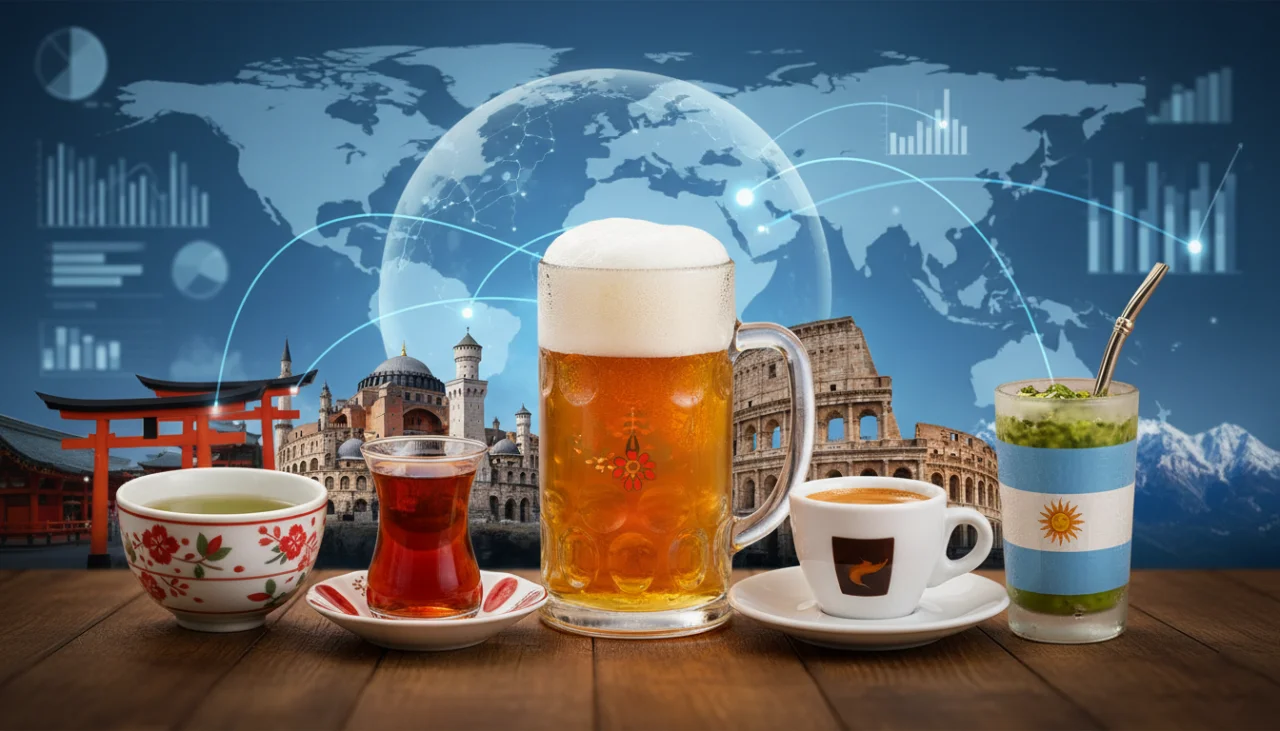
Surprising Global Drinking Habits
- Belgium chooses soda over beer: Despite being famous for producing some of the world's finest beers, Belgians actually drink more soft drinks
- Ireland drinks more tea than beer: Defying stereotypes, the Irish prefer tea to their famous stouts and whiskey
- Japan prefers milk: Despite strong tea and sake traditions, milk consumption wins in modern Japan
- United States leads soda consumption: Americans consume more soft drinks per capita than nearly any other nation
- Finland drinks the most coffee: Finns consume more coffee per person than any other country globally
What Influences National Drinking Habits?
Several factors determine what nations drink most:
Climate: Hot countries favor beer and cold drinks; cold regions prefer hot beverages like coffee and tea
Religion: Islamic nations avoid alcohol, preferring tea and milk; this explains drinking patterns across the Middle East and North Africa
Agriculture: Countries produce and consume what grows locally—wine in Mediterranean climates, coffee in tropical highlands, milk in dairy farming regions
Colonial History: Former colonies often adopted colonizers' drinking habits—tea in Ireland and India (British influence), coffee in Latin America (Spanish/Portuguese influence)
Economics: Wealth levels affect access to imported versus local beverages and premium options
Marketing: Global brands have shifted preferences dramatically, especially toward soda in developing nations
Tradition: Centuries-old customs persist despite globalization—tea ceremonies, wine with meals, beer gardens
Health Implications of Global Drinking Patterns
These consumption patterns have significant health implications:
Milk-drinking nations benefit from calcium and protein but may face lactose intolerance issues in Asian and African populations where adult lactose digestion is less common
Beer-consuming countries deal with alcohol-related health concerns including liver disease and addiction, but moderate consumption may offer cardiovascular benefits
Soda-heavy nations face rising obesity, diabetes, and dental health issues linked to high sugar consumption
Tea and coffee drinkers enjoy antioxidant benefits and improved alertness but must monitor caffeine intake to avoid anxiety and sleep disruption
Wine countries see both benefits (resveratrol, polyphenols, "Mediterranean diet" advantages) and risks (alcohol dependence, liver damage)
The Future of Global Beverage Consumption
Drinking habits are evolving due to several trends:
Health Consciousness: Rising interest in low-sugar, functional beverages, and non-alcoholic alternatives is changing consumption in wealthy nations
Globalization: Starbucks in China, bubble tea in America, craft beer worldwide—cultural exchange is accelerating
Climate Change: Affecting agricultural production zones, water availability, and traditional growing regions for coffee, tea, and wine grapes
Economic Development: Rising incomes in Asia and Africa are changing consumption patterns, with more people accessing premium and imported beverages
Younger Generations: Millennials and Gen Z seek new experiences, premium products, and sustainable options, reshaping beverage markets
Urbanization: City dwellers consume more commercial beverages and less traditional home-prepared drinks
Conclusion: What We Drink Defines Us
From Turkish tea ceremonies to German beer gardens, from Indian chai to Caribbean rum punches, our beverage choices reflect our histories, climates, and cultures. While milk emerges as the global leader consumed across 95+ nations, the diversity of drinking preferences shows that local traditions still thrive in our interconnected world.
Whether you're sipping coffee in Finland, wine in France, tea in Morocco, or milk in India, you're participating in a cultural practice that connects you to millions—and distinguishes you from billions more.
Did you find your country on the list? Does the data match your personal experience? Share your thoughts about drinking culture in your nation in the comments below!
Frequently Asked Questions
Why isn't water listed as the most consumed drink in any country?
Water is indeed the most essential beverage humans consume, and everyone drinks water daily. However, this data reflects the most consumed non-water beverages—the drinks people choose beyond plain water. Water is universal and consumed everywhere, so tracking it wouldn't reveal the cultural, economic, and traditional differences between nations. This study focuses on what makes each country unique: the coffee culture of Finland, the tea rituals of Morocco, the beer gardens of Germany, or the milk consumption of India. These choices tell us far more about a nation's identity, climate, agriculture, and traditions than water consumption would.
Does this data include all age groups or only adults?
This consumption data typically includes all age groups within each country's population, which is why milk ranks so highly globally. Children and adolescents consume significant amounts of milk, which drives up national averages in countries with young populations. For alcoholic beverages like beer, wine, rum, and spirits, the data reflects legal drinking age populations (typically 18+ or 21+ depending on the country), but since total national consumption is measured, countries with large youth populations may show lower per-capita alcohol figures. The data represents aggregate national consumption patterns across all demographics, not just adult preferences.
Additional Information
Data Disclaimer: Projected data (future years) are estimates based on mathematical models. Actual values may differ. Learn about our methodology →
Sources
-
Updated: 06.10.2025https://www.who.int/publications/i/item/9789240096745
-
Updated: 06.10.2025https://www.fao.org/faostat/en/#data/FBS
-
Updated: 06.10.2025https://ourworldindata.org/coffee
-
Updated: 06.10.2025https://datatopics.worldbank.org/consumption/sector/food-and-beverages
Please log in to leave a comment.
Log in
(0) Comments